
Total Spine Health. Consultant website with authority.
A consultant spinal surgeon needed a website that matched his credentials, supported private patient growth and created a stronger digital foundation for long-term search visibility.
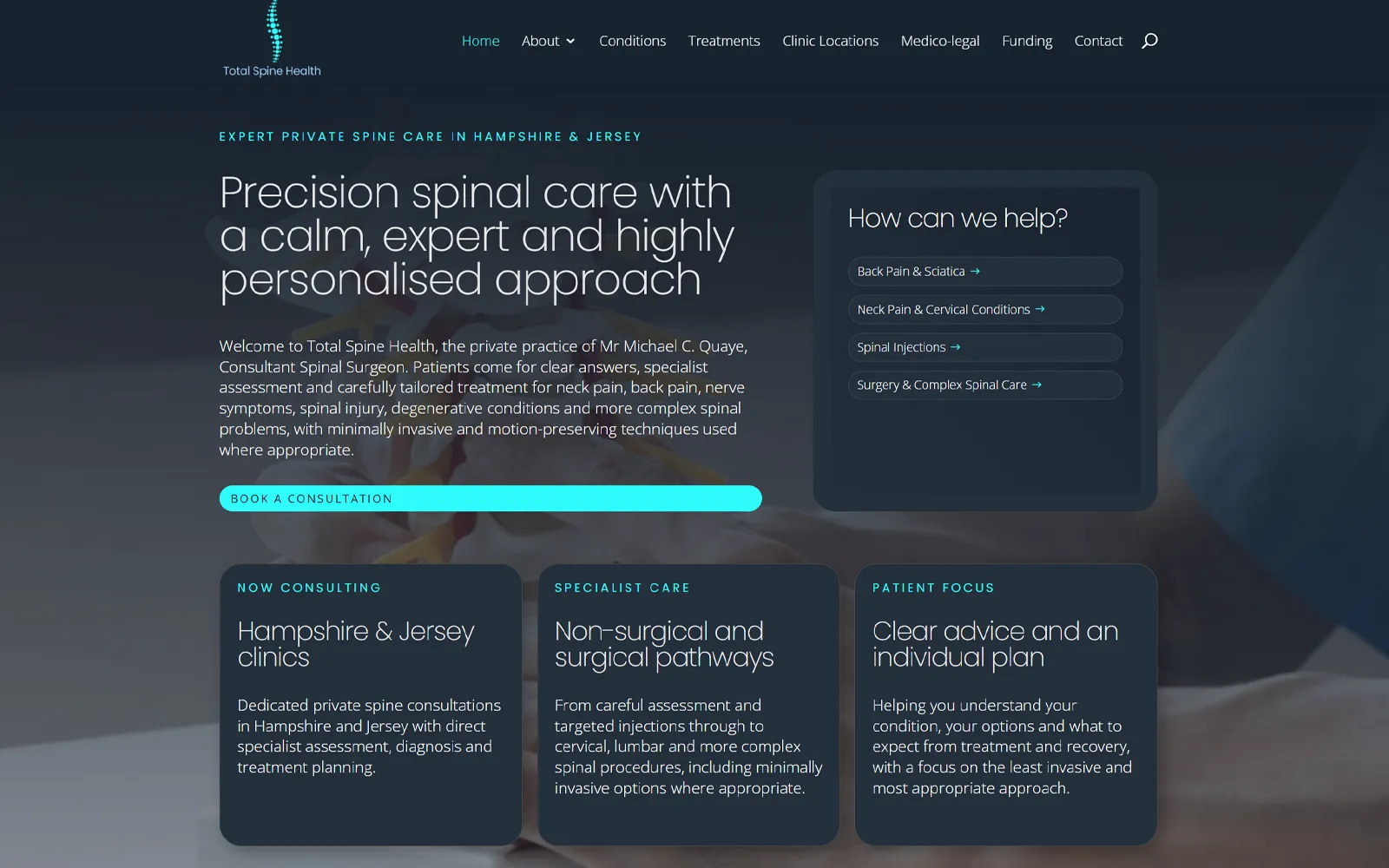
A specialist practice needed a website that felt credible.
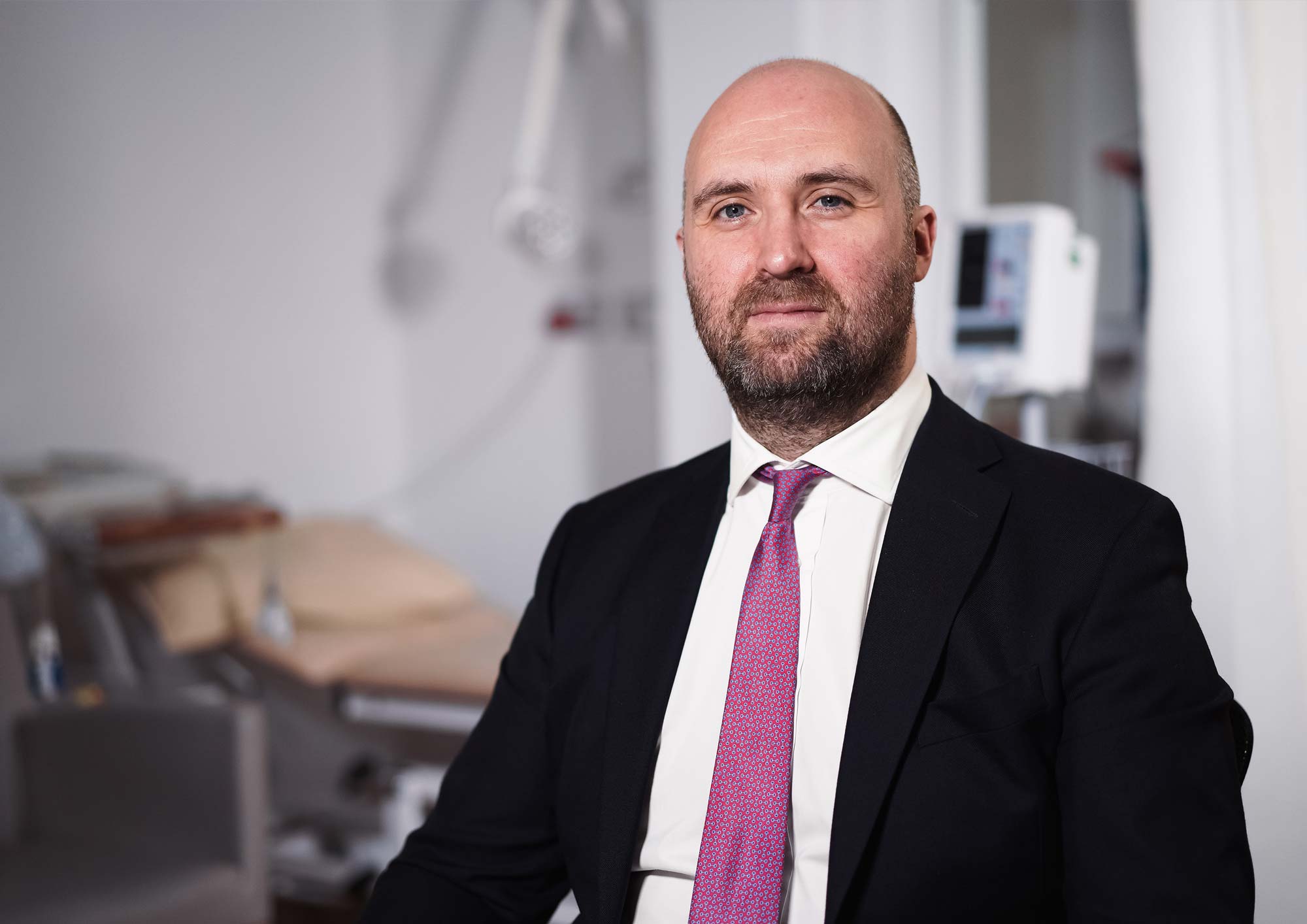
Mr Michael C. Quaye is a Consultant Spinal Surgeon and founder of Total Spine Health. With fellowship training at Southampton University Hospital, Oxford Nuffield Orthopaedic Centre, Groote Schuur Hospital in Cape Town and Frimley Park Hospital, alongside a regular appearance on BBC One’s Surgeons: At the Edge of Life, he has a strong professional profile and a highly specialist clinical background.
Total Spine Health needed a website that reflected that level of experience, while also supporting the future growth of a private spinal practice across Hampshire and Jersey.
This project was delivered as a white-label agency project on behalf of Phast Media. I worked as the designer, developer and content lead behind the build, with the project presented under the Phast Media agency relationship.
The site had to become a proper professional front door.
The previous website had served its purpose, but it no longer reflected the breadth of the practice, the depth of Mr Quaye’s expertise or the expansion of his private work.
The challenge.
The website needed to do more than look professional. It had to communicate clinical credibility, explain complex spinal conditions clearly, support local search visibility and give patients confidence before making an enquiry.
It also needed to position Jersey as a serious clinic location, not a small footnote within a wider Hampshire-focused website.
The objectives.
Medical content needs depth, structure and trust.
The site was planned around how patients search, how Google understands medical content and how consultant expertise should be presented online.
Strategy and structure came first.
A specialist medical website needs more than a homepage and contact form. It needs a clear hierarchy of conditions, treatments, clinic locations and trust-building content.
Condition and treatment architecture.
The website was structured around detailed condition pages, treatment pages, clinic location pages and patient information. This allowed the site to support both user journeys and search visibility.
Rather than relying on thin SEO pages, each page was built to answer real patient questions and provide enough detail to feel genuinely useful.
Content with proper depth.
The content was written to support traditional SEO and AI-driven discovery, using clear headings, natural questions, internal links and patient-friendly explanations.
For example, the back pain page covers symptoms, causes, diagnosis, treatment options, red flag warning signs and frequently asked questions.
Trust needed to be designed into the structure.
On a private healthcare website, trust is not just about polished visuals. It comes from clarity, transparency, clinical credibility and the way patient information is presented.
Independent feedback and outcomes.
One of the key decisions was to create a patient feedback and outcomes page that links to independent review and outcomes platforms, including Doctify and PHIN.
Rather than relying only on hand-picked website testimonials, the site points users towards independent sources of patient experience and clinical outcome information.
Clear location focus.
The Jersey clinic at Augre Physiotherapy, Lido Medical Centre was given proper visibility within the website, including a dedicated clinic location page.
This gives patients in Jersey a clear route into the service and gives the site a stronger local SEO foundation.
Built for long-term authority.
The website launched with a content programme in place, so the site could continue building relevance and authority after launch.
SEO foundations.
The technical and content structure included SEO titles, meta descriptions, internal linking, canonical tags, Open Graph support and a human-readable HTML sitemap alongside XML sitemap support.
Images were prepared in WebP format and the site was structured to support performance, clarity and future growth.
Ongoing content strategy.
The condition and treatment pages provide the foundation. Regular articles are designed to build on that foundation over time, covering spinal health topics, common patient questions and location-specific search opportunities.
This gives the website a much stronger chance of growing search visibility in a sustainable way.
Services delivered.
Website strategy and architecture
Bespoke WordPress website design
Copywriting and content structure
SEO planning and metadata
Condition and treatment pages
Clinic location pages including Jersey
Patient feedback and outcomes strategy
Hosting, setup and support
The result. A stronger consultant platform.
The finished website gives Total Spine Health a professional platform that reflects the quality and seriousness of the practice.
It presents Mr Quaye’s expertise clearly, supports patient decision-making and gives the brand room to grow as his private work develops.
The site launched with the important foundations in place: a strong technical build, detailed medical content, clear service architecture, location-specific pages and a sustainable content programme.
Need a website with proper strategy behind the design?
I design and build bespoke WordPress websites, content structures and SEO-focused digital platforms for consultants, businesses and agencies across the UK.
Start a project